Meditation Research

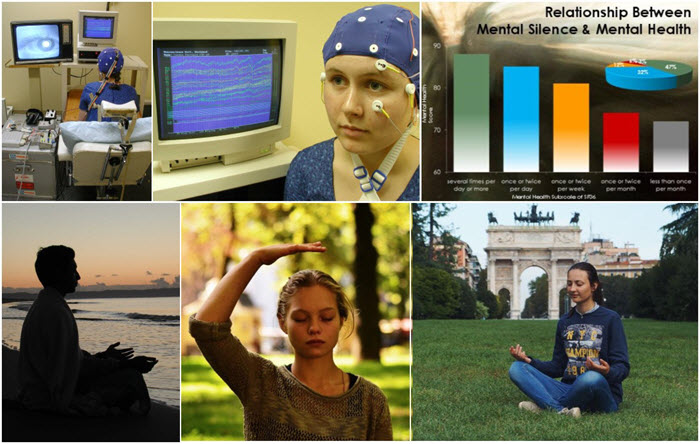
Meditation Research on brainwavesThe ancient tradition of yoga and meditation began in Indian prehistory as a system of mental, physical and spiritual exercises. In approximately 500BC the physician and sage Patanjali formalised this tradition into a science with four major and four lesser branches involving ethical restraint, self-discipline, mental focus, physical exercise and meditation. The entire system was used in an integrated fashion and directed at the attainment of a unique state of spontaneous, psychological integration1. Modern psychologists have described this state as “individuation”2 or “self-actualization”3 and it has been traditionally termed “self-realisation”.

A great deal of meditation research has occurred over the last fivety years with mixed results.4 The advent of Transcendental Meditation in the 1960s and 1970s gave scientists an opportunity to study a standardised technique. Many interesting results were obtained in multifaceted studies; however problems with methodology and interpretation of data have been noted.5 Similarly, other techniques have been assessed giving results which are often remarkable but, unfortunately, inconsistent and difficult to reproduce. The cultic connotations of many of these techniques and the organisations that promote them are also of considerable and justifiable concern and have, no doubt, hampered research in this area.6 Yet the health practitioner continues to intuitively recognise the role of stress in clinical illness, particularly in relation to the so-called “psychosomatic” diseases.7

Despite the tremendous advances in modern medicine we are still to develop truly effective strategies to deal with the common public health problems that cause most of the mortality and morbidity in the wider community. The use of stress reduction has been shown to be beneficial in many diseases, as it improves psychological and physical health and lifestyle awareness.8 Importantly the utilisation of stress reducing techniques brings us closer to the ideal of a holistic, integrated health care strategy. Several mechanisms have been proposed to explain the way in which psychological stress translates into physical disease. Some of the mystery has been explained by the “general adaptation syndrome” in which stressors induce psycho-hormonal changes. In an acute context these changes result in emergency adaptation of physiological function. In a context of chronic stimulation these changes, rather than maintaining psychological homeostasis, ultimately result in physical debilitation of body systems.9

The “parasympathetic response”, or “relaxation response”, is another mechanism worthy of investigation.10 It is the physiological opposite to that of the “fight or flight” reaction that we are all familiar with. It involves a slowing of the heart rate, reduced rate of respiration and relaxation of the muscles, in association with a reduction in circulating stress hormones and alpha brain wave activity. This physiological reaction is mediated by the autonomic nervous system, a complex set of nerves that governs all the automatic systems of the body that are essential for life. The role of the hypothalamic pituitary axis, which is the main controlling centre for the hormonal activities of the body, is also worth considering. Regardless of the underlying theories, the majority of clinicians recognise that stress is a major contributor to disease and that a simple stress management technique, such as meditation – once scientifically proven and clinically evaluated – could be widely applied in the clinical setting.

next.gif

Latest posts from Meditation Research


Meditation for menopausal symptoms
14 subjects experiencing menopausal symptoms, who were not on any other treatments were enrolled into a twice weekly, 8 week meditation programme. Pre, post and 8 week follow-up assessments included Hot Flush Diary, Greene’s. MENQOL, Kupperman, POMS, STAI self report questionnaires.  Significant improvements in all measures occurred at post treatment. Changes in vasomotor symptoms, especially [...]

Mental Silence Meditation Versus Stress Management for Asthma- A RCT
Objective: To investigate whether a meditation technique which focuses on the experience of mental silence has a beneficial effect in improving ADHD behaviour of children.   Materials and Methods: Sahaja Yoga Meditation (SYM) was used in an exploratory clinic for 48 children with ADHD and their parents in a 6–week programme of twice-weekly clinic meditation sessions and [...]

Meditation as an Adjunctive Management Strategy for Children With ADHD
Objective: To investigate whether a meditation technique which focuses on the experience of mental silence has a beneficial effect in improving ADHD behaviour of children. Materials and Methods: Sahaja Yoga Meditation (SYM) was used in an exploratory clinic for 48 children with ADHD and their parents in a 6–week programme of twice-weekly clinic meditation sessions [...]

What can we conclude about the extant data on meditation?
The many reviews thorough and reliable reviews of of meditation enable us to make some basic generalisations: First, there is insufficient evidence to support the idea that meditation, as conceived and tested by scientific researchers in the West, is any more effective than simple relaxation or rest. Second, the use of high face-validity control groups is critical in [...]

Why has western meditation research failed to demonstrate a specific effect?
The failure of the proponents of meditation in the West to produce conclusive data on its specific efficacy in the health sphere (see Ospina’s definitive treatment of this issue), has been due to understandings having been largely confined to Westernised versions of the practice. Such understandings have meant that the original ideas about meditation as [...]

Comments are closed.